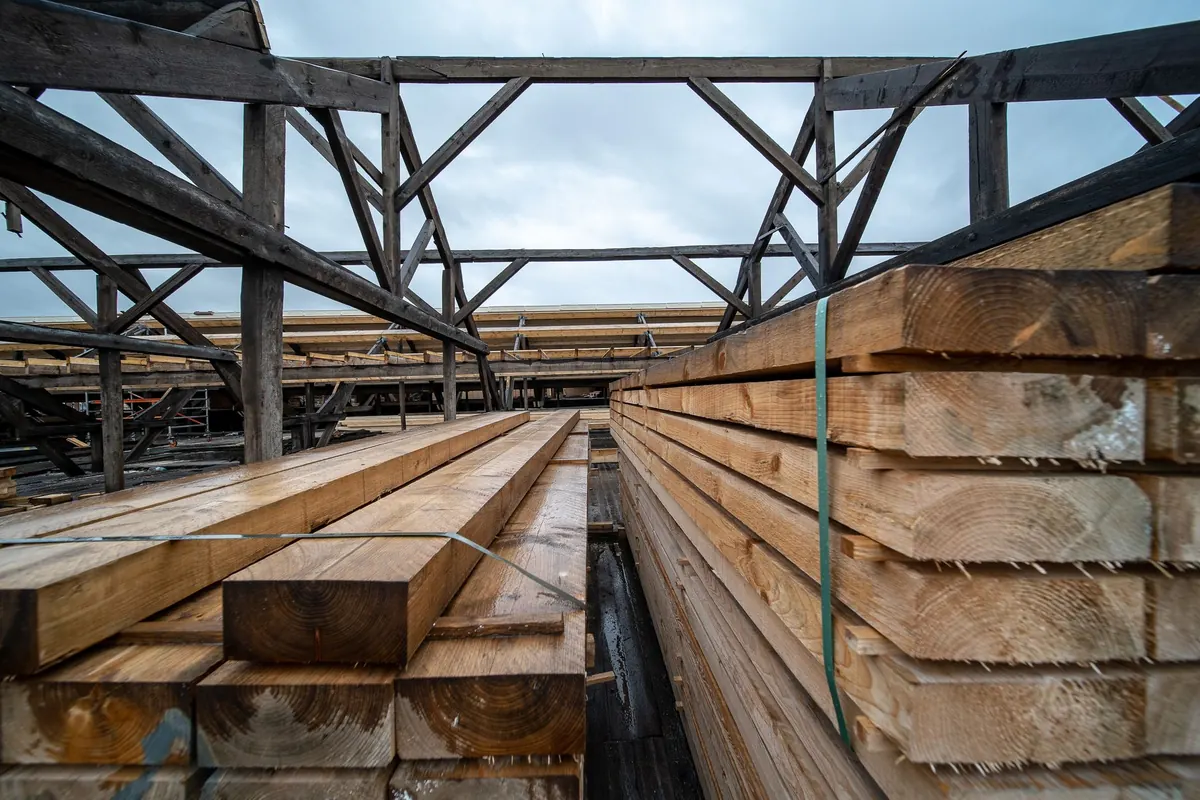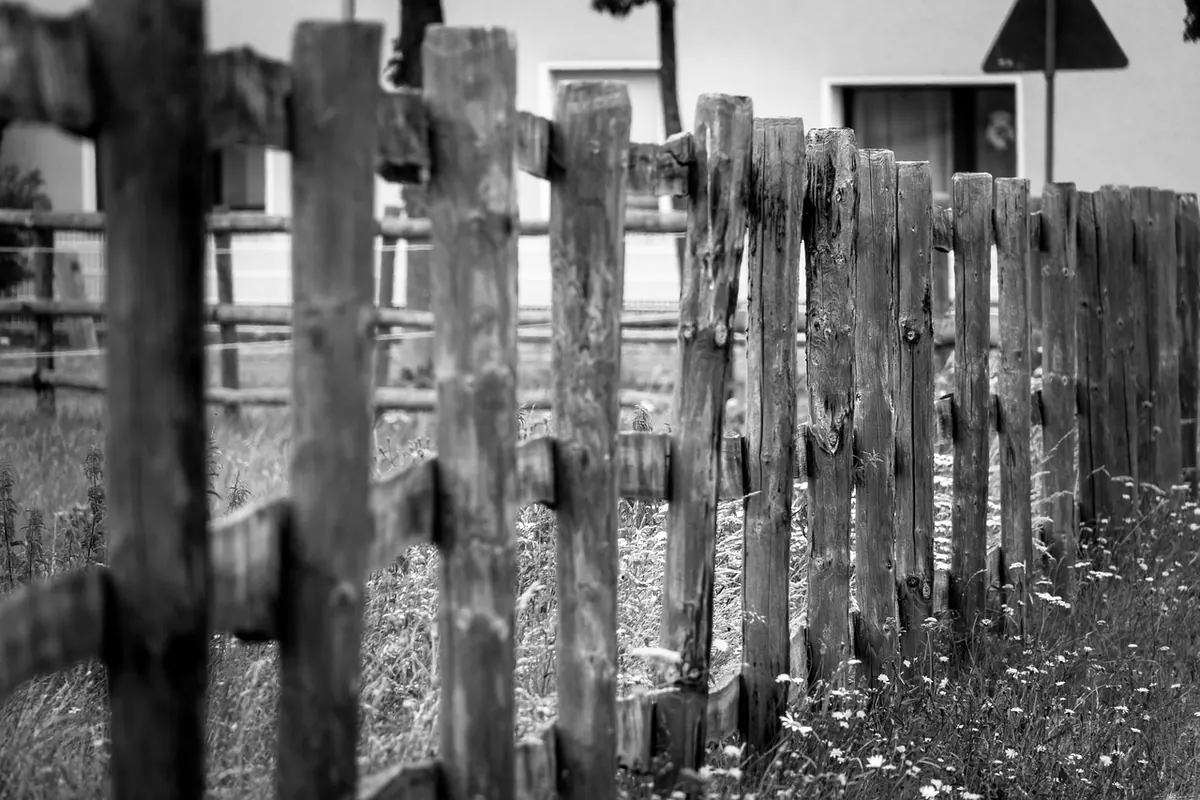
Larch earns its place in the garden. It is denser and more resinous than most softwoods, holds a decent edge, and if you leave it bare it fades to a soft silver-grey that sits well among shrubs and stone. It also has quirks. Resin can bleed through a fresh coat of oil, the hard latewood bands take finish differently from the softer earlywood, and the pale sapwood is nowhere near as durable as the darker heartwood. Prep it properly, choose a breathable finish rather than a hard film, and a larch bench or table will shrug off wet winters and humid springs for years.
Know the timber before you touch it
Two things matter more than any product choice: which part of the log you are working with, and how dry it is.
- Heartwood is the darker, resin-rich centre — the durable part. It is the wood you want on legs, feet and any surface that sits close to damp ground.
- Sapwood is the pale outer band. It is not durable and will soak up water and stain patchily. If it shows on your furniture, treat it as a weak point and give it extra coats.
- Moisture content should be down to roughly 12–15% before you finish anything. Finishing damp timber traps water under the film and it will lift or go blotchy. If the wood feels cold and heavy, or you can press a fingernail into it, leave it to dry longer.
Also check for resin pockets — dark, sticky streaks, often near knots. They are normal in larch and only a problem if you ignore them.
Preparation: sanding and de-resining
Sanding larch outdoors is not about getting a glass-smooth surface. Over-polishing closes the pores and the oil sits on top instead of soaking in. Work up to about 180 grit and stop there.
- Start with 80 grit to remove machining marks, mill glaze and any dried resin. Sand with the grain, using a block on flat panels so you do not dish the surface.
- Move to 120 grit, then finish with 150 or 180. Vacuum or brush the dust out of the pores between grits — larch dust is fine and clogs quickly.
- Ease every edge and corner very slightly with a few passes of 180. A crisp arris will not hold a finish outdoors; a small chamfer sheds water.
- Wipe the whole piece with a cloth dampened with white spirit or methylated spirits. This shows up any remaining resin and gives you a clean surface for the first coat.
Knots and resin pockets
Scrape away any weeping resin with a scraper or a cloth soaked in white spirit, then seal knots and resinous patches with a coat of shellac or a proprietary knotting solution. Without it, resin will push through oil and leave sticky brown blooms for months.
Oiling larch outdoor furniture
For British conditions, a penetrating exterior oil is the sensible default. It flexes with the timber, lets moisture vapour escape, and can be topped up without stripping. Choose an oil formulated for exterior use, with UV inhibitors and a fungicide. Avoid raw linseed oil: it dries slowly, stays tacky and feeds mould in damp weather.
- Work in dry weather, out of direct sun, with the wood surface cool. Aim for at least 10°C and no rain forecast for 24 hours.
- Apply a thin coat with a brush or lint-free cloth, working along the grain. Do not flood it.
- Keep the surface wet for 15–20 minutes, adding oil to dry patches, then wipe off everything that has not soaked in. Pools of oil dry sticky and attract dirt.
- Leave 24 hours, then apply a second coat. New or very dry larch often takes three. End grain and feet will take more — keep feeding them until they stop drinking.
- Buff off the final excess with a clean cloth. The finished surface should feel dry, not slick.
Safety note: wear a dust mask when sanding and work with ventilation when oiling. Oily rags can self-heat and ignite — spread them flat outside to dry, or soak them in water before disposal.
Staining and colouring larch
Larch takes stain unevenly, because the dense bands absorb far less than the soft growth between them. If you want a richer brown or a weathered oak tone, a pigmented exterior stain or wood preserver-plus-colour is a better bet than a clear oil, since pigment blocks UV and slows greying.
- Test on an offcut from the same batch, and let it dry fully. Larch darkens as it weathers, so the colour after a week is the one that matters.
- Use a pre-stain wood conditioner on bare larch to even out absorption, especially where sapwood meets heartwood.
- Apply thin coats with a brush, wipe back the excess within a few minutes, and resist the urge to build colour quickly.
- Keep a note of the product and mix ratio. You will want to match it at the next maintenance coat.
Sealing: what to use and what to avoid
This is where most outdoor larch projects go wrong. Thick film finishes — polyurethane, interior varnish, epoxy-style sealers — look superb for one season and then crack, peel and trap water against the wood. Once that happens, you are scraping and sanding back to bare timber.
If you want a film, use a flexible exterior spar varnish, apply several thin coats, and accept that it needs rubbing back and recoating annually. If you would rather do less work, stick with oil or a pigmented exterior stain and let the timber breathe. Either way, seal end grain generously: it absorbs water far faster than face grain and it is where rot usually starts.
Coping with British weather
Our climate is kind to larch in one respect — UV levels are moderate, so greying is slower than in southern Europe. It is unkind in another: persistent damp encourages algae, mould and surface checking. Design details help as much as products.
- Lift furniture feet off paving or soil with plastic or stainless glides. Standing water is the enemy.
- Use stainless steel fixings. Iron and untreated steel react with larch tannins and leave black stains.
- Leave gaps for air movement between slats, and store cushions inside.
- If you cover furniture, use a breathable cover, not a tarpaulin. Plastic sheeting traps condensation.
- Clean off green algae with a stiff brush and warm soapy water, or an oxalic-acid-based wood cleaner, before recoating.
An annual routine that takes an afternoon
Once a year, in spring, wash the furniture down and let it dry. Sand lightly by hand with 150 grit where the surface feels fuzzy or checked. Wipe off the dust, deal with any new resin weep, then brush on one thin coat of the same oil or stain you used before. That single coat is usually enough to keep larch looking deliberate rather than neglected.
If you would rather have the silver-grey look, you can skip the oil entirely — just clean it annually and accept a little surface checking. Either approach works, as long as you pick one and stay consistent. Half-finished larch, part-oiled and part-bare, is the only version that looks shabby.
Photo: ricardorv30 / Pixabay