Put larch and treated pine side by side on a fencing quote and the difference can look small enough to ignore. In practice they behave quite differently. One is a naturally durable timber that shrugs off the weather for years with no help at all; the other is a workhorse that only performs because of what has been pumped into it. Knowing which parts of a fence suit which timber saves money now and saves the miserable job of digging out rotten posts in eight years' time.
Two softwoods, two different jobs
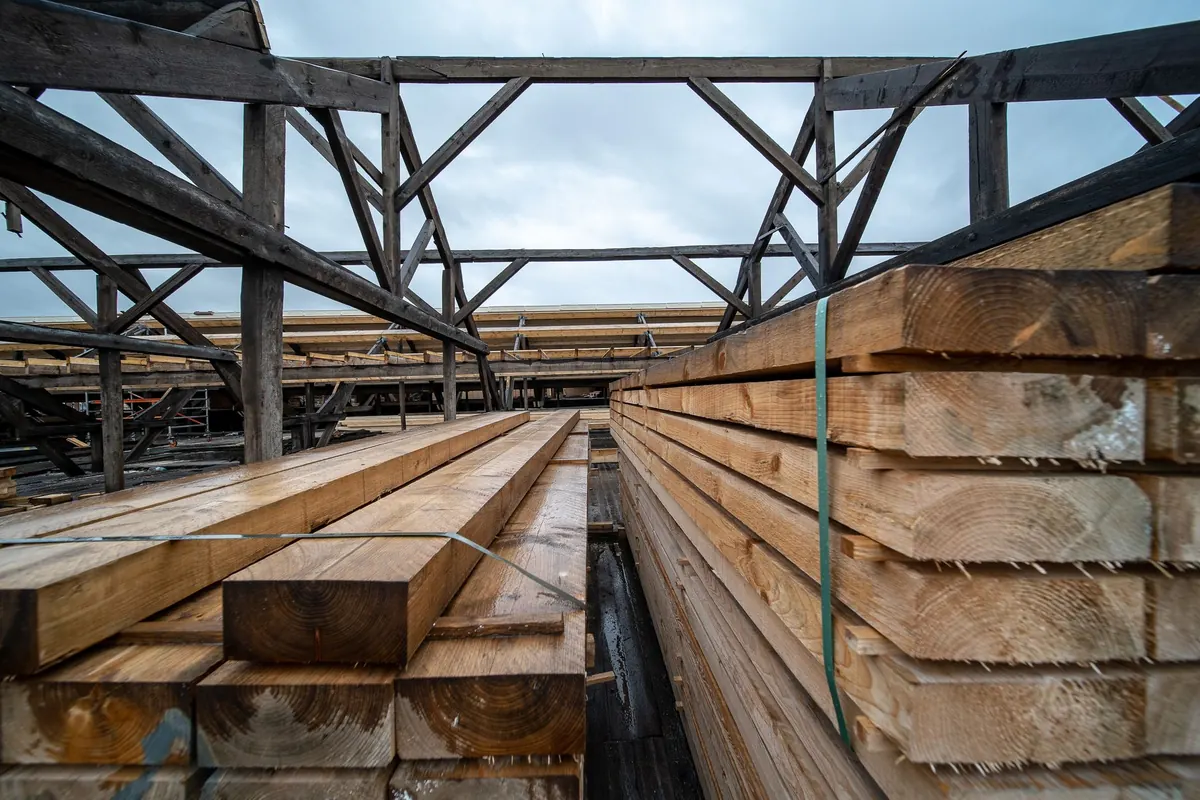
Both are softwoods, and both are sold in the same fence-post sizes, which is roughly where the similarity ends. British-grown larch — usually hybrid or Japanese larch — is denser and stiffer than pine, with a resinous heartwood that resists rot on its own. Pine, whether Scottish-grown or imported redwood, has very little natural durability. It lasts because it has been pressure-treated with preservative, not because of anything the tree did.
That one distinction drives everything else: what you pay per metre, how long each component lasts, and how much maintenance you are signing up for.
Durability: the ground line decides everything
Fence posts do not rot at the top. They rot in the 100mm or so either side of soil level, where damp, air and fungal spores all meet at once. The buried section matters far more than the visible one, and it is the section nobody looks at until the post snaps.
Untreated larch heartwood in the ground will generally give you a decade or so, and longer on free-draining ground. But every larch post carries a band of pale sapwood around the outside, and sapwood has no natural resistance whatsoever. A post cut from a big, slow-grown log is mostly heartwood and will outlast a post cut from a small, sappy one by a wide margin. You cannot always tell the difference in a stack at the yard, which is a real problem.
Pressure-treated pine, rated for ground contact, often outlasts untreated larch in the soil. The preservative is driven right through the sapwood — precisely the part that fails first. It feels wrong to buy the softer, cheaper timber for the hardest job, but for posts it is usually the sensible call.
Treatment: what each timber actually needs
Larch takes pressure treatment poorly. Its heartwood is dense and resinous, so preservative struggles to penetrate, and timber sold as "treated larch" is often only treated at the surface. Paying a premium for it is rarely worth the money. What larch genuinely needs is end-grain protection: brush a suitable preservative onto every cut end, because end grain soaks up water like a wick.
Pine is the opposite. It drinks preservative, which is why the treatment industry is built around it. Buy by use class:
- UC3 — above ground, exposed to the weather. Suitable for rails, boards and anything fixed to the face of a fence.
- UC4 — in contact with the ground. This is what you want for posts, and it is worth using for gravel boards too, since they live in the splash zone.
Skip anything described only as dip-treated for a post. Dipping wets the surface; it does not protect the core.
Cost: where larch earns its premium
Larch costs more than pressure-treated pine, metre for metre. The gap tends to be widest on thick, planed boards and long lengths, and narrower on rough-sawn rails. Treated pine is also far easier to source in matched sizes, and much easier to replace a single board from later without a visible colour mismatch.
The calculation that actually matters is not timber versus timber — it is timber versus labour. A fence is mostly time: digging holes, setting posts, levelling rails. Re-boarding a run of panels in ten years costs more in labour than the difference between pine and larch boards today. That is why a lot of good specifications end up mixed:
- Posts: pressure-treated pine to UC4, set straight and drained properly.
- Rails: larch, for stiffness and rot resistance.
- Boards and gravel boards: larch where the budget allows, treated pine where it does not.
If you want the lowest first cost and are happy to keep on top of maintenance, an all-treated-pine fence is perfectly respectable. It has been the default in Britain for decades for good reason.
Maintenance: two different routines
Bare larch
Left unfinished, larch weathers to a soft silver-grey that most people like. It needs very little: an annual check for loose fixings, a scrub where algae builds up on shaded panels, and a clear gap at the base so air can move.
Finished larch
If you want to keep the colour, oil or stain it and expect to recoat every two to four years, depending on how exposed the run is and how good the product is. Clean the timber first, or you will seal dirt in.
Treated pine
The green or brown tint fades within a season or two. Left alone, pine greys and develops fine surface cracks — normal, but they let water in. A coat of preservative or stain every couple of years slows the process noticeably. Cracks along the grain are not a fault; splits right through a board are.
Whatever you choose, use galvanised or stainless steel fixings. Larch's natural acids attack plain steel, and the black staining that follows is almost impossible to remove. Keep soil, compost heaps and vigorous climbers away from the base of any post, and fit post caps or angle the tops so water runs off rather than sitting on the end grain.
Buying and fitting: the details that add years
Ask the yard whether their larch is heartwood-rich or mixed before you commit. Sight down every length for bow and twist and reject anything twisted before it goes in the van, not after. Store timber flat and off the ground with spacers between boards so air can circulate.
On installation, the small things count for more than the species. Make sure the bottom of the post hole drains: a bed of compacted shingle beneath the post works well, and if you concrete, take the concrete slightly proud of ground level and slope it away from the post so water sheds rather than pools. Seal cut ends within a day or two. Leave a gap behind boards for airflow, and never bury a post deeper than you need to.
Get those details right and either timber will serve you well. Get them wrong and even the best larch will fail at the ground line, exactly where the cheap pine would have.
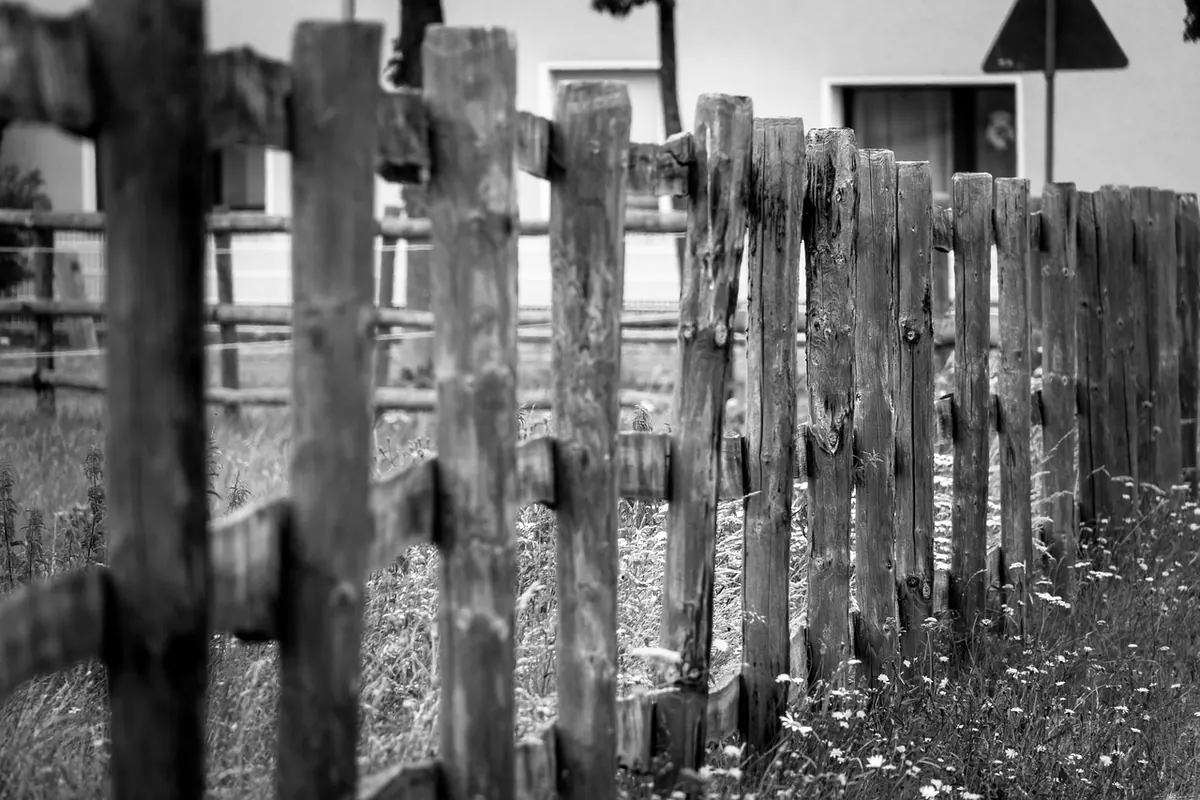
Photo: Didgeman / Pixabay